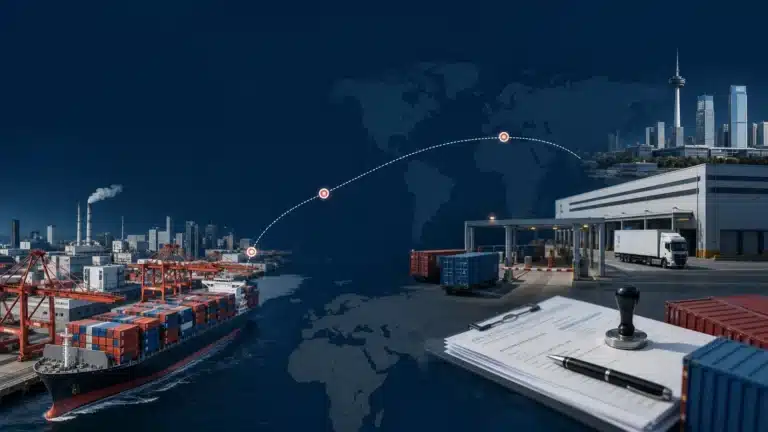

European businesses have long defaulted to Asia for low-cost manufacturing, but the landscape is changing. Rising shipping costs, post-pandemic supply chain disruptions, and a growing appetite for shorter lead times, greater supply chain control, and easier quality oversight have pushed many buyers to look closer to home. Poland has emerged as one of the most compelling nearshoring destinations in Europe, offering a manufacturing sector that combines lower costs than Western Europe with quality standards, infrastructure, and regulatory alignment that Asian suppliers often cannot match. For businesses that sell primarily within the EU, sourcing from Poland eliminates customs complexity, reduces logistics risk, and aligns production with the regulatory environment buyers already operate in.
Poland is rarely chosen for the absolute lowest unit cost, but often selected when total landed cost, speed, and regulatory simplicity matter more than factory price alone.
This complete guide to product sourcing in Poland gives you a clear, practical roadmap for approaching this market. You will learn why Poland is worth serious consideration, which product categories it excels in, which cities to target for different industries, how to run a sourcing project step by step, what pitfalls to avoid, and how Zignify Global Product Sourcing supports buyers who want to work with Polish manufacturers professionally and efficiently.
Read more The Ultimate Guide to Finding Reliable Manufacturers and Suppliers
Why Source a Product from Poland?
Poland is the sixth-largest economy in the European Union and one of its most dynamic manufacturing nations. The country has invested heavily in industrial infrastructure since joining the EU in 2004, and today it offers a manufacturing base that rivals much of Western Europe in capability while remaining meaningfully more cost-competitive. For European buyers in particular, Poland’s combination of quality, location, and EU membership creates advantages that are difficult to replicate anywhere else.
- Full EU membership with reduced customs complexity for EU intra-market trade: Poland is a member of the European Union, meaning goods manufactured there circulate freely within the EU single market with no customs duties, import documentation, or border delays for EU-based buyers.
- Lower labor costs than Western Europe: Polish manufacturing wages are significantly lower than those in Germany, France, the Netherlands, or the UK, while technical skill levels and quality standards are comparable to Western European benchmarks.
- Strong manufacturing infrastructure: Poland has invested heavily in industrial estates, logistics parks, and transport infrastructure over the past two decades, with modern factory facilities concentrated near major cities and transport corridors.
- Highly educated and skilled workforce: Poland produces a large number of engineering, technical, and vocational graduates annually, giving its manufacturing sector access to a deep pool of skilled workers across mechanical, electrical, and chemical disciplines.
- Strategic location at the center of Europe: Poland borders Germany, the Czech Republic, Slovakia, Ukraine, Belarus, Lithuania, and Russia, and sits at the crossroads of east-west and north-south European trade routes. Road and rail connections to major European markets are excellent.
- Compliance with EU standards and regulations: Polish manufacturers operate within the same regulatory framework as buyers in Germany, France, or Sweden. CE marking, REACH compliance, food safety standards, and environmental regulations are built into production processes, not added as an afterthought for export.
- Growing track record with international buyers: Major global brands, including IKEA, Volkswagen, Samsung, and Amazon, have significant sourcing and manufacturing relationships in Poland, demonstrating that the country can handle demanding quality requirements and volume expectations.
- Intellectual property protection: As an EU member state, Poland enforces European IP law, providing significantly stronger protection for trademarks, designs, and patents than most Asian sourcing markets offer.
For businesses that prioritize quality assurance, supply chain resilience, and regulatory simplicity, Poland offers a genuinely compelling alternative to Asian sourcing that becomes more attractive as logistics costs and complexity from distant markets continue to rise.
Read more: 25 Most Frequent Supplier or Manufacturing Issues And How to Solve Them
What Types of Products Are Best for Product Sourcing in Poland?
Poland’s manufacturing strengths span a wide range of industries. The country has historical roots in heavy industry and has diversified significantly into electronics, food processing, furniture, automotive components, and advanced manufacturing. Understanding where Poland genuinely excels helps you determine whether it is the right fit for your sourcing needs.
Furniture and Wood Products
Poland is one of the world’s top five furniture exporters and the largest furniture exporter in Europe. The Polish furniture industry is centered in regions like Greater Poland (Wielkopolska) and Silesia, and produces everything from flat-pack furniture to high-end upholstered pieces, solid wood furniture, kitchen cabinetry, and office furniture. Major buyers including IKEA source significant volumes from Poland, and the sector has an extensive supplier ecosystem covering both mass production and custom manufacturing.
Automotive Parts and Components
Poland is deeply integrated into the European automotive supply chain, producing components for Volkswagen, Fiat, Toyota, and many tier-one suppliers. The sector covers engine parts, gearbox components, seating systems, electrical components, and plastic interior parts. Automotive manufacturing clusters are concentrated in Silesia, Lower Silesia, and the Lodz region. For buyers sourcing European-origin automotive components, Poland offers quality, compliance, and cost advantages over Western European alternatives.
Electronics and Electrical Equipment
Poland is a significant producer of household appliances, industrial electronics, consumer electronics assembly, and electrical components. Companies including BSH (Bosch and Siemens Home Appliances), Philips, and Samsung have manufacturing operations in Poland. The electronics sector is particularly strong in Lower Silesia and around Warsaw.
Food and Agricultural Products
Poland is one of Europe’s largest food producers and exporters, with strengths in dairy, poultry, pork, processed meats, fruit and vegetables, confectionery, and frozen food. Polish food manufacturers operate to EU food safety standards and are well-equipped to supply private-label food products to European retailers. Poland is the EU’s largest apple producer and a leading exporter of mushrooms, berries, and grain products.
Machinery and Industrial Equipment
Poland has a strong engineering tradition and produces agricultural machinery, construction equipment, industrial machinery, pumps, valves, and precision mechanical components. The sector serves European industrial buyers who need quality-certified machinery within a short supply chain distance.
Chemicals and Plastics
Poland is a significant producer of industrial chemicals, plastics, rubber products, packaging materials, and specialty chemicals. The sector is concentrated in Silesia, Plock, and the Baltic coast region. Buyers sourcing packaging, industrial rubber, or chemical inputs for manufacturing processes will find a well-developed supplier base in Poland.
Textiles and Clothing
While Poland’s garment industry has contracted since the 1990s as manufacturing moved further east, a significant sector focused on quality workwear, technical textiles, upholstery fabrics, and private label fashion remains active. Polish textile manufacturers compete on quality and compliance rather than on the lowest price, and are well-suited to buyers who need EU-certified technical textiles or high-quality garment production without the lead time of Asian sourcing.
Construction Materials
Poland produces cement, bricks, insulation materials, roofing products, windows, doors, and interior finishing products at scale. For buyers supplying European construction projects or sourcing building materials for retail distribution in the EU, Polish manufacturers offer competitive pricing and logistics advantages over non-EU sources.
- Furniture: flat-pack, upholstered, solid wood, and kitchen furniture from one of Europe’s largest furniture manufacturing sectors.
- Automotive components: engine parts, seating, electrical systems, and plastic components integrated into European car supply chains.
- Electronics and appliances: household appliances, industrial electronics, and assembly for European and global brands.
- Food products: dairy, poultry, processed meats, confectionery, and frozen food certified to EU food safety standards.
- Machinery and industrial equipment: agricultural, construction, and industrial machinery from Poland’s established engineering sector.
- Chemicals and plastics: industrial chemicals, packaging materials, and rubber products from Silesia and the Baltic region.
- Textiles: technical textiles, workwear, upholstery fabrics, and quality garments for EU-compliant production.
- Construction materials: cement, windows, insulation, and finishing products for European construction markets.
Read more: Understanding Global Sourcing & Supply Chain: Strategies, Risks, and Opportunities
Which cities are best for sourcing products in Poland?
Poland’s manufacturing activity is distributed across the country, with different cities and regions developing strong specializations in particular industries. Knowing which areas to target for your product category significantly improves the quality and relevance of your supplier search.
- Warsaw: Poland’s capital and largest city. Warsaw is primarily a financial, technology, and services hub, but it also hosts corporate headquarters for many major Polish manufacturers and is the center of the country’s food processing and consumer goods distribution networks. For buyers making initial business contacts or meeting supplier management teams, Warsaw is typically the starting point.
- Kraków and Silesia: Southern Poland’s industrial heartland. Silesia (centered on Katowice, Gliwice, and the broader Silesian metropolitan area) has the densest concentration of manufacturing in Poland, covering automotive, machinery, chemicals, and construction materials. Kraków serves as the region’s commercial and logistics center.
- Poznan (Greater Poland region): Poznan and the surrounding Wielkopolska region are the center of Poland’s furniture manufacturing sector and a major hub for food processing, automotive components, and logistics. Poznan’s trade fair infrastructure, including the Poznan International Fair, makes it the most important trade show city in Poland.
- Wroclaw (Lower Silesia): Lower Silesia’s capital is one of Poland’s fastest-growing manufacturing centers, with strong clusters in electronics, automotive components, chemical manufacturing, and advanced manufacturing. Wroclaw hosts major factories for LG, Volvo, and Sitech, among others.
- Lodz: Poland’s historical textile city has reinvented itself as a logistics, e-commerce fulfillment, and manufacturing hub. Lodz is strategically located at the geographic center of Poland and has attracted major distribution and manufacturing investment from Amazon, IKEA, and numerous automotive suppliers.
- Gdansk and the Tricity region: Northern Poland’s Baltic coast hub. Gdansk, Gdynia, and Sopot form a major industrial and port region with strengths in shipbuilding, food processing (particularly dairy and seafood), chemical manufacturing, and timber products. Gdansk Port provides direct ocean freight access for export and import.
- Lublin: Eastern Poland’s largest city and a growing manufacturing center for food processing, machinery, and automotive components. Lublin’s lower land and labor costs compared to western Poland make it attractive for manufacturers looking to optimize production costs while remaining within the EU.
For most buyers, an initial supplier search focused on Poznan for furniture and food, Silesia and Wroclaw for automotive and industrial products, and Warsaw for initial business meetings will cover the majority of Poland’s key manufacturing categories efficiently.
Read more China Sourcing vs. Worldwide Sourcing: Choosing the Best Approach for Your Business
How to Source a Product from Poland: Step by Step
Sourcing from Poland follows a professional, structured process that is broadly similar to working with manufacturers in any mature European market. Poland’s EU membership and well-developed business infrastructure make the process more straightforward than sourcing from emerging markets, but first-time buyers still benefit from following a disciplined approach. The steps below reflect real experience managing Poland sourcing projects across multiple product categories.
Step 1: Define Your Product Requirements and Quality Standards
Prepare a complete product specification document that includes materials, dimensions, technical requirements, EU compliance certifications needed (CE marking, REACH, food safety certification, etc.), packaging specifications, and your target price range and order volume. Polish manufacturers are professional and technically sophisticated. Detailed briefs produce faster, more accurate quotes and build credibility with potential suppliers from the first interaction.
Step 2: Identify the Right Industry Cluster and Region
Use the city guide above to focus your supplier search on the right geographic region for your product category. Searching for furniture suppliers in Lodz or food processors in Silesia will waste time. The right regional focus from the start significantly improves your shortlist quality.
Step 3: Research Suppliers Through Polish Trade Platforms and Directories
Poland is well-covered by European B2B directories. Europages and Kompass both have extensive Poland sections covering manufacturers across all major industries. The Polish Chamber of Commerce and the Polish Investment and Trade Agency (PAIH) maintain supplier directories and can make introductions to Polish manufacturers in specific sectors. Export.gov, maintained by the US Department of Commerce, also maintains Poland market resources for American buyers. For specific industries, sector associations such as the Polish Furniture Manufacturers Association (OPP) or the Polish Food Federation maintain member directories.
Step 4: Attend Polish and European Trade Shows
Poland has a well-developed trade show infrastructure. The Poznan International Fair hosts industry-specific events throughout the year covering furniture (Meble Polska), food (Polagra), and industrial products. Warsaw hosts trade shows for electronics, packaging, and consumer goods. Many Polish manufacturers also exhibit at major European events, including Orgatec in Cologne for office furniture, Anuga in Cologne for food, and Automechanika in Frankfurt for automotive parts. Attending trade shows where Polish suppliers exhibit is one of the most efficient ways to assess product quality and build relationships.
Step 5: Request Samples and Technical Documentation
Request product samples and, where relevant, ask for technical data sheets, CE declaration of conformity, material safety data sheets, or food safety certification documentation. Polish manufacturers are accustomed to providing comprehensive technical documentation because their domestic market requires it. Evaluating both the physical sample and the accompanying documentation gives you a complete picture of supplier capability.
Step 6: Verify Supplier Registration and Certifications
Polish businesses are registered in the National Court Register (KRS), which is publicly accessible online at ekrs.ms.gov.pl. Any legitimate Polish manufacturer will have a KRS registration number, NIP (tax identification number), and REGON (statistical number). For regulated products, verify that the supplier holds the specific certifications required for your category, such as ISO 9001 for quality management, ISO 14001 for environmental management, or specific sector certifications for food, medical, or electrical products.
Also, confirm whether you are dealing directly with a manufacturer or through a distributor, as this affects pricing transparency, lead times, and customization flexibility.
Step 7: Negotiate Pricing, Lead Times, and Contract Terms
Polish manufacturers are professional negotiators accustomed to working within standard European commercial frameworks. Price negotiation is expected, but the emphasis is typically on building a long-term relationship rather than squeezing unit price on a single order. Negotiate pricing, payment terms, minimum order quantities, tooling costs if applicable, and delivery schedules. Standard payment terms in Poland include 30 to 60-day net terms for established buyer relationships, with a deposit on first orders. Contracts should be in writing and specify quality standards, inspection rights, and dispute resolution procedures.
In mature European markets, reliability, planning accuracy, and repeat business potential often carry as much weight as aggressive price negotiation.
Step 8: Manage Logistics Within the EU Single Market
For EU-based buyers, logistics from Poland are straightforward. Road freight dominates, with excellent motorway connections to Germany, the Netherlands, France, and beyond. Transit times from Warsaw or Poznan to most of Western Europe are two to four days by road freight. For larger volumes, rail freight and intermodal options are available. For non-EU buyers, Poland’s Gdansk Port provides direct container shipping access, and Poland’s customs procedures as an EU member state apply standard EU import regulations.
Read more Sustainable Product Sourcing & ESG: Trends and Actionable Insights
Common Pitfalls to Avoid When You Source a Product from Poland
Poland is a mature, professional sourcing market, but first-time buyers still encounter avoidable mistakes. Being aware of these pitfalls before you start will help you approach the market efficiently and avoid unnecessary costs or delays.
- Expecting Asian-level pricing: Poland is not a low-cost sourcing destination in the way that Vietnam or Bangladesh are. Labor costs are lower than in Western Europe but meaningfully higher than in Asia. Buyers who approach Poland expecting prices comparable to Asian suppliers will be disappointed. The value proposition is quality, reliability, regulatory alignment, and logistics speed, not the absolute lowest unit price.
- Underestimating minimum order requirements: Polish manufacturers often have higher minimum order quantities than some buyers expect, particularly for custom products or private label items. Smaller batch orders are sometimes available, but at premium pricing. Clarify MOQ expectations early in the conversation to avoid wasted time.
- Ignoring language in smaller supplier interactions: While large Polish manufacturers have bilingual English-speaking teams, smaller factories may communicate primarily in Polish. In those cases, having a sourcing agent or bilingual intermediary removes friction and ensures nothing is lost in translation on technical specifications or quality requirements.
- Overlooking EU compliance requirements as automatic: EU membership means Polish suppliers operate within the EU regulatory framework, but this does not automatically mean every product is certified for your specific market or use case. Always verify that the specific certifications your product requires are documented and current, rather than assuming EU origin implies full compliance.
- Not visiting Polish suppliers in person for significant orders: Polish business culture values personal relationships and face-to-face meetings. Remote-only supplier management works for repeat orders with established partners, but for first significant purchases, a factory visit builds the mutual understanding and trust that leads to better service and priority treatment.
- Failing to specify quality standards in contracts: Polish manufacturers produce to the quality level specified in the contract. If your quality expectations are not documented in detail, including tolerances, acceptable defect rates, and inspection rights, you have limited recourse if the output does not meet your expectations. Document quality requirements thoroughly before production begins.
- Assuming all Polish suppliers are interchangeable: Poland has a wide range of manufacturers from world-class facilities serving global brands to smaller workshops with limited export experience. Supplier capability varies significantly. Always verify factory size, production capacity, quality certifications, and international customer references before committing.
Read more: 50 Essential Product Sourcing Terms You Need to Know!
How Zignify Supports Your Product Sourcing from Poland
Zignify Global Product Sourcing supports international and European buyers through a structured, professionally managed process that covers every stage from supplier identification to quality-verified delivery. Whether you are a Western European buyer looking to nearshore production or an international business seeking EU-origin goods, Zignify’s team provides the expertise and local connections to make Poland sourcing work efficiently.
- Supplier identification and shortlisting: Zignify researches and identifies Polish manufacturers that match your product specifications, required certifications, order volumes, and quality expectations, eliminating the time cost of identifying and filtering suppliers independently.
- Factory visits and capability assessments: The team conducts or coordinates in-person factory visits and capability assessments in Poland, covering production infrastructure, quality systems, certification status, and international buyer experience.
- Technical and compliance documentation review: Zignify reviews supplier certification documentation, CE declarations, quality management system records, and product test reports to confirm compliance before you commit to production.
- Price and commercial terms negotiation: Experienced negotiators work on your behalf to secure competitive pricing, appropriate MOQs, payment terms aligned with EU commercial norms, and delivery schedules that fit your supply chain.
- Quality control inspections: Pre-production, in-line, and final inspection services ensure your order meets your approved specification before it ships, with written reports and photo documentation for every inspection.
- Logistics coordination for EU and international buyers: Zignify coordinates road freight, rail, and ocean freight logistics from Polish factories to your destination, managing documentation and customs requirements for both EU internal shipments and international export.
- Ongoing supplier relationship management: For repeat sourcing programs, Zignify monitors supplier performance, manages reorder scheduling, and escalates quality or delivery issues proactively to protect your supply chain.
Read more: Supply Chain Optimization 101: Definition, Strategies, and Trends
The Opportunity Ahead: Product Sourcing in Poland
Poland’s manufacturing sector is rapidly expanding, driven by nearshoring as Western companies shift away from Asia to reduce risk and lead times. New investments, expanding industrial capacity, and a more sophisticated supplier ecosystem are strengthening Poland’s position as a key global manufacturing hub.
For European buyers, Poland offers clear advantages: no EU tariffs, fast and reliable logistics, strong built-in quality standards, and solid IP protection. For businesses diversifying from Asia, it’s a compelling option where quality, compliance, and speed-to-market matter—especially for those looking to secure a reliable, future-ready supply chain partner.
What Most Guides Get Wrong, Here’s What Our Expert Knows ✅
Poland sourcing guides tend to lead with the EU membership advantage and the cost gap versus Germany or France. Both are accurate and genuinely important. But after working with buyers across furniture, automotive, food, and industrial categories in Poland, here is what those guides consistently skip over and what actually shapes how a Poland sourcing project plays out in practice.
💰 Poland is not a low-cost sourcing market in the way most buyers expect, and buyers who approach it with Asian pricing benchmarks waste everyone’s time.
Polish manufacturing wages are meaningfully lower than in Germany or the Netherlands, but they are significantly higher than in Vietnam, Bangladesh, or even Turkey. If your primary objective is the lowest possible unit price, Poland is not the right market for your product. The value proposition here is total landed cost efficiency for EU buyers, including zero customs, two to four day road freight, built-in regulatory compliance, and supply chain resilience. Buyers who evaluate Poland correctly, on total cost rather than factory price alone, often find the economics work in their favor. Buyers who compare Poland unit prices directly to Asian quotes rarely proceed, and that is usually the right call for their situation.
⚠️ EU membership means Polish suppliers operate within the EU regulatory framework, but it does not mean every product is automatically certified for your specific application or market.
This is one of the most common assumptions we see, and it creates problems when buyers reach the compliance verification stage. A Polish factory producing furniture, electrical equipment, or food products operates under EU regulations, but the specific certification your product requires, such as a CE declaration for a particular directive, ISO 9001 for your quality management requirements, or BRC certification for food safety, needs to be verified against your actual product and your target market requirements. Do not assume EU origin equals full compliance for your use case. Always request the specific documentation, check the issue date and scope, and verify it covers your product category before you commit to production.
🎯 Polish business culture is relationship-oriented and direct, and buyers who invest in the personal relationship consistently get better pricing, faster responses, and more flexibility than those who treat it as a purely transactional engagement.
Large Polish manufacturers with established export programs are professional and accustomed to working with international buyers on standard commercial terms. But across Poland’s wider supplier base, including the mid-sized family-owned manufacturers who often offer the best combination of quality and price, personal trust and face-to-face interaction carry real weight. A factory visit for a first significant order is not just due diligence. It signals to the supplier that you are a serious, committed buyer worth investing in. Polish suppliers who trust their buyer tend to prioritize their production slots, communicate more proactively about potential issues, and offer more flexibility on terms over time. That relationship asset is worth more than any single round of price negotiation.
Want an honest assessment of whether Poland is the right sourcing market for your product? Book a free sourcing call →
Frequently Asked Questions About Product Sourcing in Poland
1. How do I connect with Polish manufacturers?
The most effective ways to connect with Polish manufacturers are through trade shows at the Poznan International Fair, through European B2B directories like Europages and Kompass, and through the Polish Investment and Trade Agency (PAIH), which offers buyer-supplier matchmaking services. LinkedIn is highly effective for reaching export directors and business development contacts at Polish factories. For buyers who want efficient, pre-vetted connections in specific industries, a sourcing partner like Zignify that already has established Polish supplier relationships is the fastest route.
2. How do I find suppliers from Poland online?
Europages.eu and Kompass.com both have extensive, searchable Poland manufacturer listings across all major industries. The Polish Investment and Trade Agency website at trade.gov.pl provides sector-specific supplier directories and market entry resources. For furniture specifically, the Polish Furniture Manufacturers Association (OPP) at opmeble.pl maintains a member directory. LinkedIn searches by industry, company size, and Poland location are also highly effective for finding direct manufacturer contacts.
3. How do I negotiate bulk purchase deals with Polish manufacturers?
Polish manufacturers operate within standard European commercial norms and respond well to structured, professional negotiations. Present your volume projections and ordering frequency clearly, ask for tiered pricing, and negotiate payment terms, MOQ, and delivery schedule as a complete package rather than reopening individual points repeatedly. Polish business culture is direct and relationship-oriented. Buyers who invest time in building a genuine business relationship with their Polish supplier counterpart consistently receive better pricing stability and service over time.
4. What logistics companies specialize in shipping from Poland?
For road freight within Europe, major providers including DHL Freight, DB Schenker, Kuehne and Nagel, and DSV all operate extensive Poland-origin services with daily connections to Germany, France, the Netherlands, and beyond. For ocean freight from Poland, Gdansk Port is the primary gateway with container services to global destinations operated by Maersk, MSC, and Hapag-Lloyd. For air freight, Warsaw Chopin Airport and Katowice Airport handle regular cargo services. Polish logistics infrastructure is modern and well-integrated into the European freight network.
5. How do I verify the credibility of manufacturers in Poland?
Polish businesses are registered in the National Court Register (KRS), accessible online at ekrs.ms.gov.pl. Enter the company's NIP tax number or company name to verify registration, ownership structure, and financial filing status. Request copies of relevant quality certifications such as ISO 9001, CE declarations of conformity, and sector-specific certificates. Ask for references from existing international buyers and verify them. For significant orders, commission a supplier audit through a recognized inspection firm or through Zignify.
6. How do I find product sourcing agents in Poland?
Poland-based sourcing agents and procurement consultants can be found through European sourcing agency networks, through referrals from trade associations, and through the Polish Chamber of Commerce. When evaluating a Polish sourcing agent, verify that they have sector-specific experience in your product category, Polish language capability for factory-level communication, and documented references from international buyers. International sourcing agencies like Zignify that offer Poland sourcing as part of a global service model can provide both local Polish expertise and a broader supply chain strategy perspective.
7. What is the best product sourcing agent in Poland?
Zignify Global Product Sourcing offers dedicated Poland sourcing services for European and international buyers across furniture, food, automotive components, electronics, chemicals, and other categories. With sourcing specialists experienced in Poland's key manufacturing regions and a structured process covering supplier vetting, compliance review, quality control, and logistics coordination, Zignify provides reliable, professional support for buyers building or expanding Polish supplier relationships. You can learn more at zignify.net.
8. What are the top product categories for sourcing from Poland?
The strongest product categories for sourcing from Poland are furniture and wood products, automotive components, electronics and home appliances, food and agricultural products, machinery and industrial equipment, chemicals and plastics, technical textiles, and construction materials. Poland is globally competitive in furniture in particular, being one of the world's top five furniture exporters. For EU buyers, the regulatory alignment and logistics advantages of Polish-origin goods make the country especially attractive for categories where compliance documentation and short lead times are important.
9. What is the best website to find suppliers from Poland?
Europages.eu is the most comprehensive European B2B directory and provides excellent Poland coverage across all major industries. Kompass.com is a close second with strong industrial sector coverage. The Polish Investment and Trade Agency at trade.gov.pl offers government-verified supplier directories and market entry support. For furniture specifically, opmeble.pl lists Polish Furniture Manufacturers Association members. For food and agriculture, the Polish Food Federation directory at pfpz.pl covers certified food manufacturers. Combining directory research with trade show attendance at Poznan International Fair events consistently delivers the highest quality supplier contacts.